So you want to fly drones professionally. The first real decision you’ll face is VLOS vs BVLOS. These two certifications sound similar, but they lead to very different careers.
This guide breaks down what each one means, who they’re for, and how to choose the right starting point.
What Does VLOS Mean?
VLOS stands for Visual Line of Sight. It is the foundation certificate for commercial drone pilots in Nigeria.
With a VLOS certificate, you can legally operate a drone as long as you can see it with your own eyes, without binoculars or a screen. This covers most everyday commercial work.
VLOS pilots commonly handle:
- Real estate and event photography.
- Basic site surveys and mapping.
- Agricultural spraying and crop checks.
- Small-scale inspection work.
At ARCO Aviation Academy, the VLOS course runs for 15 days and requires no prior aviation background. It is the entry point most pilots use before moving further.
What Does BVLOS Mean?
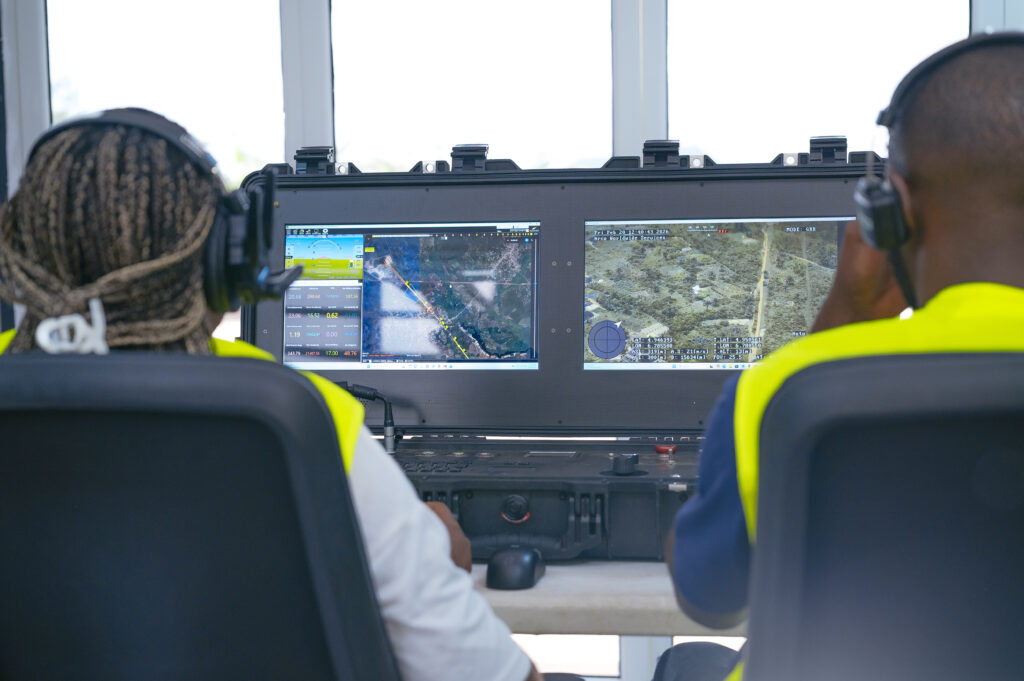
BVLOS stands for Beyond Visual Line of Sight. This certification allows you to fly a drone far beyond what your eyes can track, using navigation systems and remote command tools instead.
This is where the highest-paying, most technical drone work lives. BVLOS pilots fly long-range missions across pipelines, power corridors, and remote terrain that VLOS operations simply cannot reach.
BVLOS training builds on VLOS and adds:
- Advanced mission planning.
- Risk assessment for long-range flights.
- Command-and-control systems.
- Simulator and field-based BVLOS operations
At ARCO Aviation Academy, the BVLOS course takes 7 days, but VLOS certification is a required prerequisite first.
VLOS vs BVLOS: The Key Differences
The core difference comes down to sight. A VLOS pilot must see the drone directly at all times, while a BVLOS pilot can operate far beyond eyesight using navigation and command systems.
That difference shapes everything else. VLOS suits photography, small surveys, and spraying missions. BVLOS suits pipeline monitoring, power line inspection, and long-range mapping, work that simply cannot happen within eyesight.
Course length reflects this gap too. At ARCO Aviation Academy, VLOS training runs 15 days and requires no prior certification. BVLOS training takes 7 days, but only after VLOS certification is complete.
Earning potential follows the same pattern. VLOS opens the door to entry and mid-level commercial work. BVLOS unlocks the higher-paying, enterprise-grade missions that Nigeria’s oil and gas, power, and infrastructure sectors depend on.
Which One Should You Choose First?
If you are new to drone flying, VLOS is the only place to start. It is Nigeria’s foundational commercial certificate, and BVLOS training will not accept you without it.
If your goal is long-term, high-value work in oil and gas, power infrastructure, or large-scale surveying, treat VLOS as step one and plan for BVLOS right after. Most serious drone careers in Nigeria pass through both.
Why Certification Source Matters
Not every training provider carries the same weight. ARCO Aviation Academy is Nigeria’s first NCAA-approved RPAS training organisation, meaning your certificate is issued under the same regulatory authority that licenses manned commercial aviation.
Classes are capped at 15 students, so every trainee gets real flight time and direct instructor feedback, not a crowded lecture hall. Instructors are active ARCO Worldwide Services operators with over 15,000 hours of BVLOS experience, which means you learn from real missions, not theory alone.
Start Your Certification Path
VLOS gets you flying legally. BVLOS gets you into the industry’s highest-paying missions. Either way, the right starting point depends on where you want your drone career to go.
Ready to begin? Contact ARCO Aviation Academy to find out which certification path fits your goals.