Nigeria’s oil and gas sector has a visibility problem. Pipeline vandalism keeps making headlines, and most corridors still rely on ground patrols that respond after the damage is done. So the industry doesn’t just need more security. It needs more certified pilots trained to fly the aerial surveillance missions closing that gap.
That’s exactly what BVLOS training Nigeria programs prepare you for, and it’s one of the fastest-growing drone career paths in the country today.
Why Oil & Gas Is Hiring BVLOS-Certified Pilots Right Now
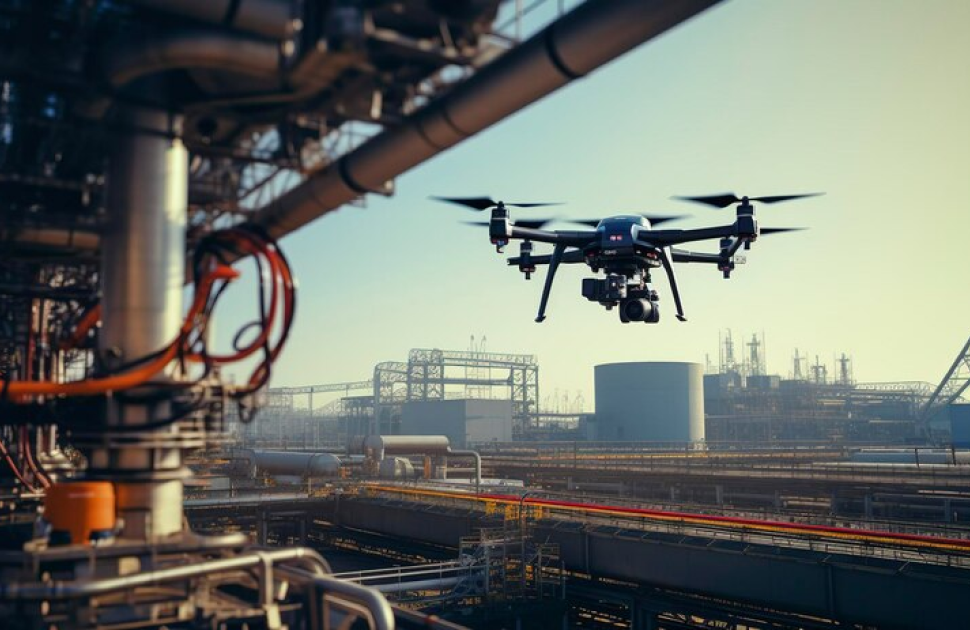
Persistent aerial surveillance is becoming standard practice across pipeline corridors, offshore platforms, and processing facilities. Operators are shifting from reactive ground patrols toward continuous monitoring instead. That shift needs pilots certified to fly long-range missions safely.
This isn’t a future trend. It’s happening now, across upstream, midstream, and downstream operations. Every corridor under aerial watch needs a trained BVLOS pilot behind it.
What Makes BVLOS Different From Standard Drone Flying
BVLOS stands for Beyond Visual Line of Sight. Unlike VLOS flying, where you must see the drone directly, BVLOS pilots fly missions far beyond eyesight using navigation systems and remote command tools.
This distinction matters enormously in oil and gas work. Pipeline corridors and offshore platforms stretch far beyond what any pilot could track visually. So BVLOS certification is what makes long-range, uninterrupted monitoring possible in the first place.
Why Choose BVLOS Training Nigeria at ARCO Aviation Academy
At ARCO Aviation Academy, the BVLOS course runs for 7 days, building directly on VLOS certification. Trainees move through advanced mission planning, risk assessment for long-range flights, and command-and-control systems.
Simulator work plays a central role here too. Before flying a real mission, students train on scenarios that mirror actual enterprise operations, corridor surveillance, remote terrain navigation, and emergency response planning included.
Instructors are active ARCO Worldwide Services operators, not classroom-only trainers. That means students learn from pilots with over 15,000 hours of real BVLOS flight experience, much of it earned flying missions like pipeline and facility inspection.
What This Training Actually Prepares You For
BVLOS-certified pilots move directly into some of the highest-value drone work in Nigeria. That includes:
- Pipeline corridor surveillance for leak, corrosion, and intrusion detection
- Offshore platform and rig inspection
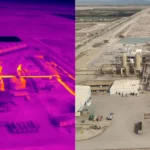
- Facility and flare stack thermal monitoring
- Emergency response support across remote oil and gas sites
These aren’t hypothetical roles. ARCO Worldwide Services flies these exact missions today, using platforms like the DJI Matrice 400 and Matrice 4T across the full oil and gas value chain.
From Certification to Career
Graduates of ARCO Aviation Academy don’t just leave with a certificate. They leave connected to ARCO Worldwide Services, Nigeria’s leading drone operations company, and to an industry actively hiring for exactly this skill set.
If you already hold a VLOS certificate, or you’re ready to start that path first, BVLOS training Nigeria is the next step toward high-value work in one of the country’s most active drone-hiring sectors.
Ready to train for oil and gas’s highest-paying drone missions? Apply for BVLOS training at ARCO Aviation Academy today.