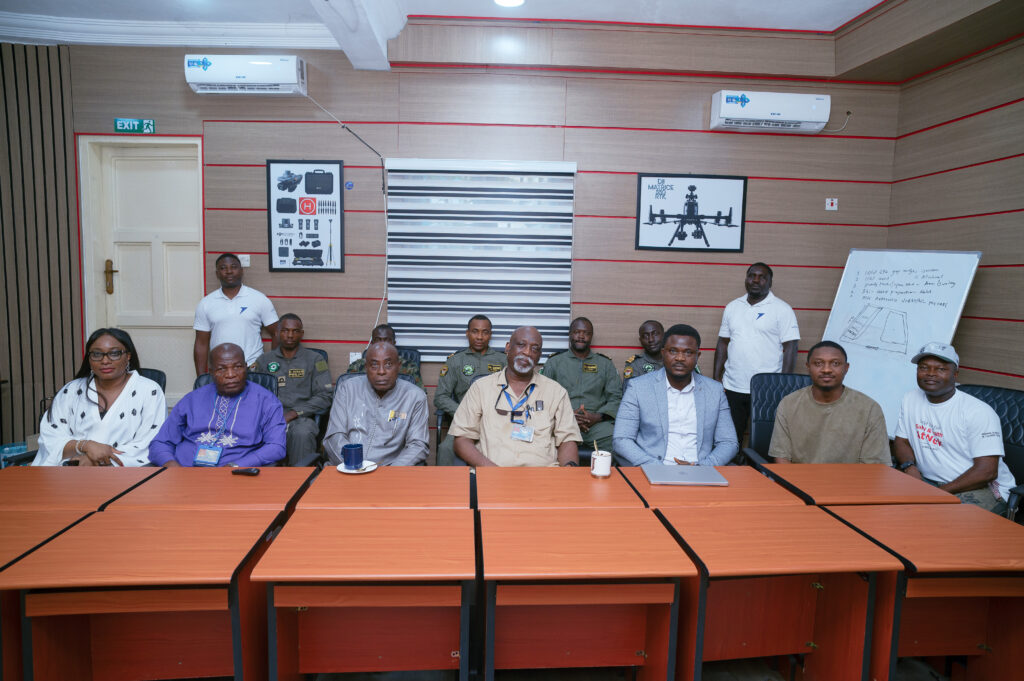
Corporate Drone Training: Build an In-House Flight Team
Buying drones is easy. Flying them legally, safely and usefully is not.
Many Nigerian organisations discover this in the same order. The equipment arrives, enthusiasm is high, and then the aircraft sits in a store room. Corporate drone training is what turns that hardware into a working capability.
Why hardware alone stalls
A drone programme fails for predictable reasons.
Nobody on staff holds a remote pilot licence, so flights cannot be authorised. Airspace approvals are unclear. Data comes back inconsistent, because different people fly different routes at different heights. Eventually the programme quietly stops.
None of these are equipment problems. They are capability problems, and capability is built through training.
Compliance is the starting point, not the finish
Commercial drone operations in Nigeria fall under NCAA regulation. Your pilots need licences, and your operations need approvals and documented procedures.
That framework is not paperwork for its own sake. It defines how missions are planned, how risk is assessed and how records are kept. Therefore corporate drone training has to cover regulation first, then flying skill, then data quality.
What an enterprise team actually needs
A functional in-house unit needs more than one pilot with a certificate. It needs coverage across four areas.
- Licensed pilots, trained to commercial standard and current on their aircraft
- BVLOS capability, where corridor, pipeline or long-range monitoring is required
- Maintenance and airworthiness skills, so aircraft stay serviceable in the field
- Mission planning and safety management, so every flight is repeatable and defensible
Get those four right, and the programme survives staff turnover. Miss one, and it depends on a single individual.
How ARCO Aviation Academy delivers it
ARCO Aviation Academy is Nigeria’s first NCAA-licensed drone training institution, and our enterprise programmes are built for teams rather than individuals.
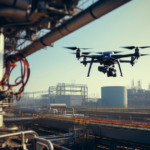
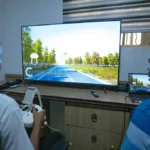
We deliver dual-license commercial training, basic RPAS and VLOS instruction, BVLOS certification, simulator sessions and maintenance courses. Training can be structured around your sector, so an energy team practises asset inspection while a security team practises surveillance patterns.
Crucially, we train inside a live operation. Our instructors fly commercial missions for oil and gas, telecom, power, mining and government clients. Consequently, your team learns current practice, not textbook theory.
Who we train
Corporate drone training suits organisations that already own assets worth watching.
We work with enterprise drone units, corporate upskilling teams, government and agency personnel, and existing operators expanding their scope. Sessions run from our Lagos, Abuja and Port Harcourt bases, or at your own site where facilities allow.
The blended model most clients choose
You do not have to choose between an in-house team and an outsourced service.
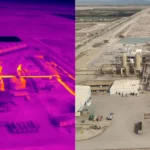
Many organisations run both. Routine, high-frequency work stays internal, because the team is already on site. Specialised missions, such as BVLOS corridor monitoring, LiDAR survey or thermal inspection, go to ARCO Worldwide under our Drone as a Service model.
As a result, you keep day-to-day control while avoiding the cost of building rare, expensive capability yourself.
Turn equipment into capability
Drones only create value when trained people fly them to a standard. Everything else is an asset on a shelf.
If your organisation is ready to build real internal capability, start with the academy that trains Nigeria’s working commercial crews.
Contact ARCO Aviation Academy to design your team’s programme.