Career Change Into Drones: Which Background Transfers Best
Most people considering this move assume they are starting from zero. Usually they are not.
Commercial drone work sits on top of existing disciplines rather than replacing them. So a career change into drones tends to reward whatever you already know, provided you choose the route that matches it.
The industry needs interpreters, not just operators
This is the part that surprises career changers.
Flying is the smallest component of the job. The value lies in knowing what the data means, and that knowledge usually comes from somewhere else entirely.
A surveyor already understands coordinate systems. An electrical engineer already recognises a failing connection. An agronomist already knows what crop stress looks like on the ground.
Consequently, the industry hires people who can connect aerial data to a professional judgement. Pure pilots sit lower in that order.
Which backgrounds transfer best
Surveying and geomatics. The strongest transfer of all. You already work with accuracy, datums, coordinate systems and deliverables. Aerial capture becomes another instrument rather than a new profession.
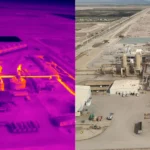
Engineering, particularly electrical and civil. Inspection work depends on recognising defects. An engineer reads structural and electrical findings faster than any training can teach.
Security and military service. Surveillance work values discipline, procedure, situational awareness and comfort with documentation. Those are already built.
Agriculture and agronomy. Multispectral data means nothing without agronomic interpretation. You bring the half that cannot be taught quickly.
Photography and film. Composition, exposure and client expectation transfer directly into aerial production work.
IT, GIS and data analysis. Processing is where many operators are weakest. If you handle large datasets comfortably, that is a commercial skill in itself.
What every route still requires
Your background does not exempt you from the aviation side.
Certification is mandatory. Commercial drone work in Nigeria falls under NCAA regulation, and no serious operator will place an uncertified pilot on a mission regardless of experience elsewhere.
Procedure has to be learned properly. Mission planning, risk assessment, airspace awareness and documentation are aviation disciplines, not transferable ones.
Judgement about when not to fly comes last and matters most. Weather, airspace and site conditions produce that call, and no previous profession prepares you for it.
What training looks like
ARCO Aviation Academy is Nigeria’s first NCAA-licensed drone training institution, and our pathway accommodates people arriving mid-career.
Basic RPAS and VLOS instruction establishes the foundation. Dual-license commercial training makes you employable. From there, specialisation follows your background rather than a generic syllabus.
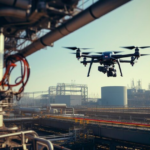
BVLOS certification opens corridor, pipeline and surveillance missions. Maintenance courses add field capability. Simulator sessions run throughout, so failures happen somewhere they cost nothing.
No aviation experience is required. Discipline is, because safe flying is mostly procedure.
Train where the work happens
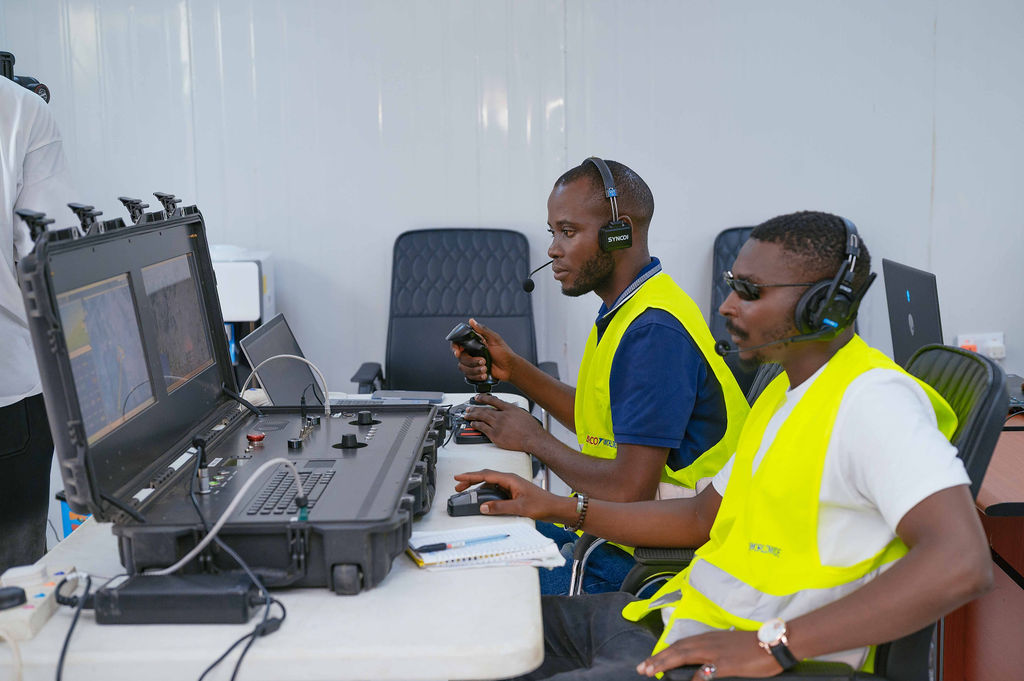
Our academy sits inside ARCO Worldwide, Nigeria’s leading certified drone operations company.
Instructors fly commercial missions across oil and gas, telecom, power, mining and agriculture, under ISO 9001:2015 certified standards. So you train on enterprise platforms and learn what a client expects from a deliverable.
For a career changer, that last point matters disproportionately. You already know how professional work is judged in your current field. This is how it gets judged here.
Build on what you have
The question is not whether to start again. It is which part of your existing experience the industry is short of.
Answer that, and the training becomes an extension of your career rather than a departure from it.
Ready to make the move? Enrol with ARCO Aviation Academy today.